Back-to-school means thinking about time spent both inside and outside of the classroom with your students. What field trips will best bring science to life for those easily distracted kids with short attention spans? Will all the time and energy that goes into planning these excursions pay off in terms of an enriching and engaging experience for your students?
One of my favorite high school science excursions is to the DLR School Lab at the German Aerospace Center (Deutsche Zentrum für Luft- und Raumfahrt) in Berlin or, as my students like to call it, the German NASA. Students from grades 7 – 12 get to learn about planetary research, optical information systems, transportation research and much more.
The DLR School Lab offers close to twenty lab experiences for students and teachers to choose from. Last year we chose the Heat vs Temperature, Name that Asteroid and Floating Car Data labs. In each lab students collect or are given a set of data they must use to answers question or solve a problem. The hour long lab sessions are run by graduate students from the Technical University of Berlin (TU Berlin). My students find these grad students relatable so the sessions are relaxed, engaging and fun. No stuffy college professors necessary.
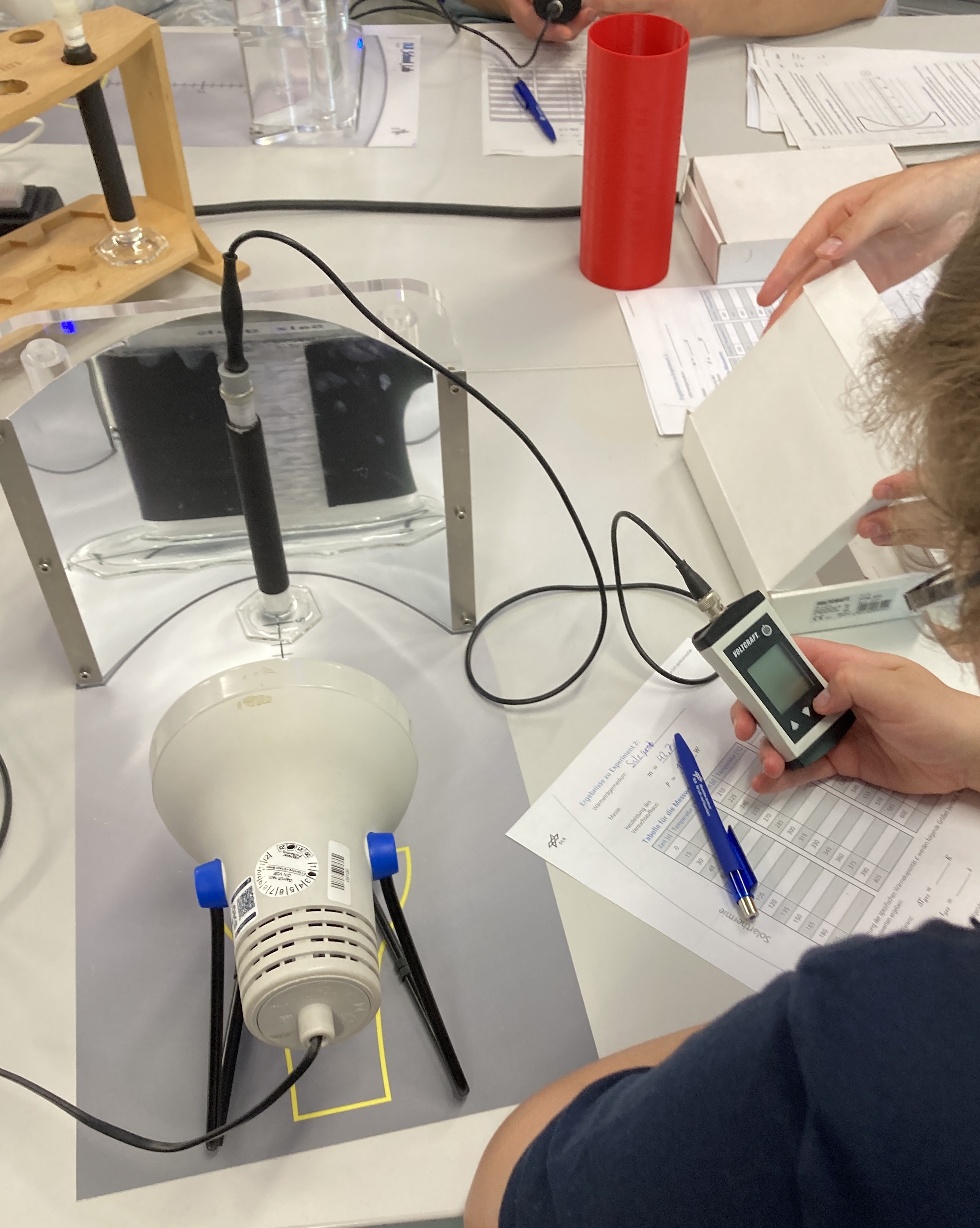
Over the course of our day at the DLR School Lab, students first designed an experiment to identify a series of unknown liquids in the Heat vs Temperature lab. They were given high intensity light sources, concave mirrors, electronic sensors and three to four liquid samples. Students learned to detect observable differences between the liquids and how the lab equipment could be used to collect the data needed to identify the liquids based on their thermal properties. The grad students expertly facilitated student understanding.
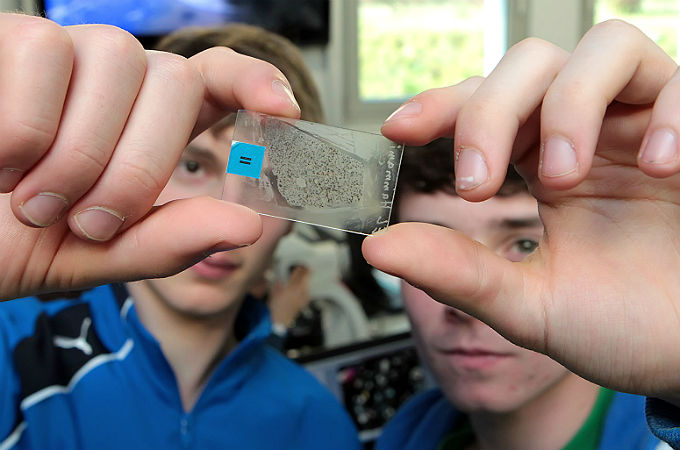
In Name that Asteroid, students learned all about the uncertainty in scientific classification. They were given information that is used to identify different types of meteorites and thin sections of samples taken from actual meteorites. Using sophisticated microscopes with different light sources and filters to identify the internal structure and minerals present, each group had to classify the meteorite and present their decision. Through the questions posed by the other groups, students quickly saw that there can be differing opinions about their decisions.
When driving through a city, we all want to know the fastest way to get from point A to point B. In the Floating Car Data lab, students play a board game to see how the DLR is developing a computer model using GPS data from taxis to make traffic flow more efficiently. Although this was the lowest tech experience of the day, students still had fun answering traffic questions and using the available GPS data to see who could get across town the fastest.
Whether it’s the beginning, middle or end of the school year, providing science students with real-life experiences outside the classroom helps to enliven their studies. Returning to the classroom and relating those experiences to your course material is a great way to tie it all together. Students may see field trips as a free day outside of the classroom, but teachers can help ensure that they come away with new knowledge that they could not have gained from their school books.
 Step by Step Science