I’ve always been enamored of the periodic table. Its logical organization supports understanding of the atomic structure and chemical reactivity of the elements based on where they appear in the table. The periodic table that is commonly used today is based on the original table created by Dmitri Mendeleev in 1869. Mendeleev was the first scientist to notice the patterns in chemical reactivity of certain naturally occurring elements.
Mendeleev’s original table included just 63 elements while today’s table has blossomed to 118. Two of those elements are named after women. Many people know of Marie Curie and her discovery of both radium and polonium. Curie is the only woman to have won two Nobel prizes, one in chemistry and one in physics. You can learn about Marie Curie’s profound impact as a mentor for women in science in a new biography that I highly recommend, The Elements of Marie Curie: How the Glow of Radium Lit a Path for Women in Science.
Fewer people know of Lise Meitner, who discovered nuclear fission. Meitner never won a Nobel Prize despite being nominated 19 times, but the element meitnerium was named after her in 1997.
Students usually enjoy learning facts and figures about the elements. To support student learning, we’ve created a free periodic table puzzle which you can directly download here.
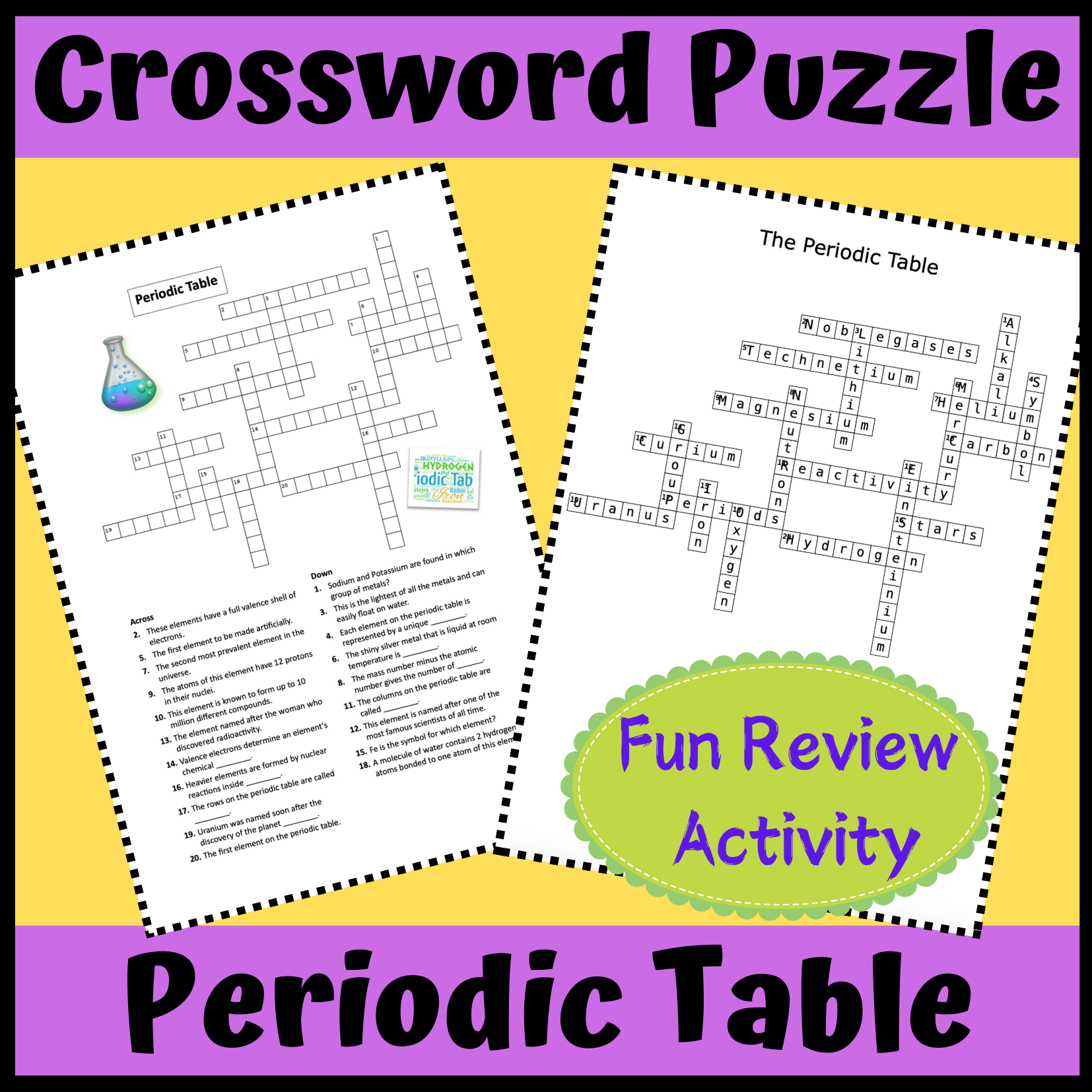
What’s your favorite element? When I ask my students this question, they usually respond with a blank look on their faces. But one of our first projects in class is the “Element Sales Brochure”. Each student chooses an element and must imagine they are working in the advertising department of an element producing chemical company. Sales of their element are below expectations and therefore they must create a tri-fold brochure highlighting the properties and practical uses of their element in order to increase sales. Extra credit is given to students who give their short sales pitch as a presentation in front of class. (In case you were wondering, Molybdenum is my favorite element. I just like to say that word and it is also one of the chemical constituents of the beautiful orange-red mineral wulfenite.)
The periodic table possibilities are endless. After we have taken a deep dive into our study of this amazing resource, I like to review with a quick round of Pin-the-Element-on-the-Periodic-Table. For this fun class activity, I draw a rough sketch of the periodic table on the board and give each student an index card with something written on it. It could be the name of an element, a type of element, one of the properties of a group of elements or some other interesting fact about the periodic table. Then, at the same time, all of the students in class get out of their seats and “pin” their card to the most appropriate location on the periodic table. After they are done and have returned to their seats, we go over the placement of the cards and discuss the results as a whole class.
Looking for more helpful, time saving, ready to use, print and go resources for atomic structure? See our full list of resources for atomic structure here.
 Step by Step Science